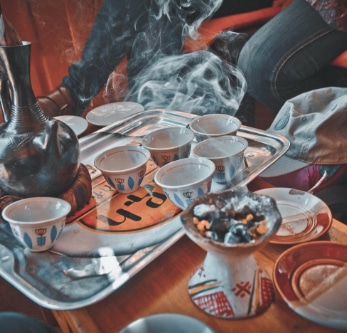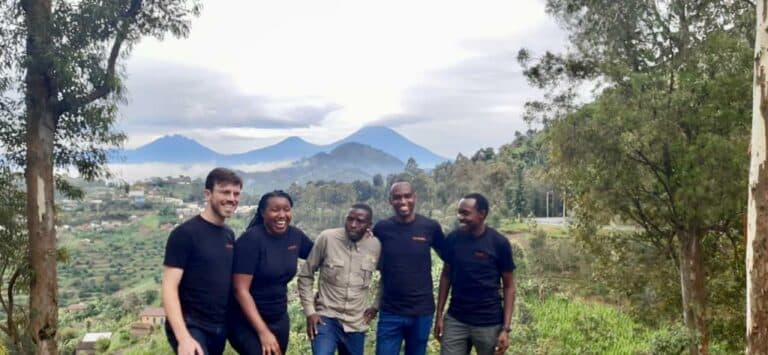
Go Further leads journeys like no one else. Join us to discover the people, cultures, cities, markets, wildlife and natural beauty of each destination.
With the best guides in Ethiopia, Uganda and Rwanda, you’ll enjoy a carefree and fascinating journey with time to unearth rich, local heritage and savor exceptional landscapes.
We believe in the power of business to better our world. We are creating a long-term enterprise founded on our team’s core values to sustain a positive social, environmental and economic impact.
Book your city tour or day trip directly through our website here. For overnight tours, Please get in touch/fill in this form/click here. Tours go on rain or shine!
Yes, certainly! If you’re open to traveling with others in a group you might be able to join another journey, so please let us know. It’s rare for us to be able to pair folks up all on one trip, though we’re happy to try!
All of our team are fully vaccinated and we adhere to local government regulations and best practice recommendations on an ongoing basis.
Our City Tours and Day Trips are public tours joined by international guests. If you’d rather take one of these exclusively for you and your group for a flat fee of $75, please select the private option during checkout.
We strongly recommend you have travel insurance and that you carefully check that your policy covers all the activities you intend to carry out on your trip. Specific things to look out for might include evacuation and repatriation, medical expenses and emergency treatment, adventure sports, altitude cover, cancellation/curtailment or travel abandonment, and baggage cover.
Medevac insurance will cover only the cost of a daylight evacuation helicopter taking you to the Kigali’s main hospital or airport in a medical emergency. Medevac is only included on trips in Rwanda. Please note that it does not cover the cost of any medical treatment, medical repatriation or any onward travel (such as flying to South Africa for treatment), and we strongly recommend you have a travel insurance policy that covers you for this in case of incident throughout your travels.
Bed and breakfast (B&B) covers the cost of your overnight accommodation and breakfast only. With half board (HB), you’ll have your accommodation, breakfast and dinner covered. Choosing full board (FB) covers accommodation, all meals and soft drinks. You’ll see what is included on each trip as standard and we’re happy to make additions and adjustments as required.
No, unless specified in your quote. Beer is produced locally and is easily available, and gin is made in Uganda. Wine is imported mostly from Europe and South Africa.
We use the best vehicle for each journey. This could be a modest city car to nip around Kigali on a private tour for two, a 8-seater safari vehicle to cross Akagera, a minibus to bring your group across the country in comfort, or even a helicopter if you wish. All our vehicles are clean and orderly and driven by experienced, professional drivers.
The principal differences are accommodation and transport; you’ll always travel comfortably with us but sometimes you might prefer to splash out. Moderate means charming yet simple accommodation, such as a local guest house with a pretty and peaceful garden to enjoy. High will more likely mean a hotel, perhaps with a bar or restaurant onsite and slightly plusher amenities. Luxury accommodation offers more personal service, maybe a pool or spa, and more western-style comforts.
Luxury or 5-star accommodation in Ethiopia and Uganda isn’t likely to be the same standard you might find in Europe and the US. The lodges do offer excellent service and are sympathetic to their environment, but it is usually the breathtaking location that gives them an edge.
Absolutely! Our tours are completely customisable. For example, if you’d prefer a lazy, slow morning enjoying a coffee and the view we’ll suggest an alternative way to spend the afternoon, or if you’d like to extend your trip to cross a site off your bucket list we’ll arrange for it.
If you had a great experience, and feel you’d like to, we do suggest tipping your guide. Between $10 and $30 per guest per day of your trip is considered generous. This is slightly different in the case of gorilla tracking, when we recommend $10-$30 per guest be given to the lead guide and $10-$15 per guest to each porter. Tips are usually given in full directly to your guide at the end of a trip. In restaurants 10% of the total bill is usual. Know that tips will be very greatly appreciated.
Definitely! Whether it’s a luxurious pool day in Kigali, spa treatments in Addis or wandering around Lalibela with a camera in hand, sometimes you want some unstructured time to breathe in, to explore and absorb your surroundings. When planning your trip we’ll suggest when and where would be the best time for you to fly solo.
Ethiopia is generally safe but it is best to take a few precautions. We suggest keeping your valuables out of sight and being aware of belongings, especially when traveling on public transport, in markets or a busy area – this is particularly good practice in Addis Ababa. Also be aware of pickpockets (usually children offering chewing gum or tissues for sale), and we suggest using a trusted taxi driver when traveling in the evening (avoid any you see chewing kat, which is a narcotic leaf).
Most visitors to Ethiopia need a visa. You can purchase a tourist visa online here or on arrival at Addis Ababa (Bole) International Airport. A one month visa is $US50 and three months $US75. It is best to bring cash to pay for your visa as credit cards are only accepted when the network permits (please note that USD bills must be from 2006 or newer). For Ethiopian Airline customers with a less than 24 hour layover, free transit visas are available through the airline.
If you fly into the country with Ethiopian Airlines, you’ll receive a large discount on all domestic flights that you take, which may be booked upon arrival.
Ethiopia is a cash economy with credit cards rarely accepted except at the largest hotels. The most reliable way to access cash is from a hotel lobby ATM, though you may only withdraw 4,000 birr (approx. $US175) per transaction. You can exchange USD (bills must be from 2006 or newer) at most hotels at a competitive rate.
You’ll need insurance that covers staying at altitude, activities such as hiking, medical evacuation and repatriation.
There are a number of private hospitals throughout Addis. We recommend the Suisse Clinic. There are plenty of pharmacies but we do suggest that you bring all medication you may require with you. We suggest that you check your insurance covers you for medical evacuation and repatriation.
Addis Ababa is above the malaria line and therefore it is considered safe not to take antimalarials. However, areas below 2,000m, such as Omo, are considered high risk and antimalarials are recommended. There have been no reported ebola infections and precautionary health checks are in place at the airport.
There is a risk of Zika virus (ZIKV) in Ethiopia and it is recommended that pregnant women do not travel to the country.
For the latest health information and recommendations visit https://travelhealthpro.org.uk/country/76/ethiopia
Under International Health Regulations, a Yellow Fever vaccination certificate is required for travelers over 9 months of age arriving from countries with risk of Yellow Fever, or having spent a layover of more than 12 hours in such a country. A certificate is valid for life.
Yellow Fever is a viral infection transmitted by mosquitoes and is present in Ethiopia. Read more about it here.
No. Do not drink tap water anywhere in Ethiopia and make sure your drinking glass is dry before using it. It is safe to drink only bottled or boiled water. The tap water is fine to wash with.
You can purchase a local 3G or 4G SIM card for 15 birr ($US1) from an Ethio Telecom office (you’ll need to bring a copy of your passport and two passport photos) or more quickly at a ‘phone suks’ reseller at a small markup. Airtime/credit is bought in the form of a scratchcard that may be purchased almost everywhere for 100 birr ($US4). GSM phones don’t always work in Ethiopia.
WiFi is available in most hotels in the country but it isn’t absolutely reliable.
Ethiopia’s weather varies by altitude, though the temperatures remain relatively constant throughout the year. The central plateau, including Addis Ababa, is usually mild with cool evenings, and most rainfall occurs between June and September during the monsoon (kiremt) season. The lowlands, particularly to the south-east of the country, are significantly drier and hotter, with the heaviest rain falling in July and August. The Afar desert region in the north-east, site of the Danakil Depression and the volcano Erta Ale, is hot all year and is noted for being the hottest, driest place on earth.
Conservative dress is the norm (at least knee-length shorts or skirts) and we suggest avoiding anything very revealing. Check out our essential packing list to ensure you have everything you need.
It is essential that you agree to the fare before you get into a taxi in Addis. Fares range from 150-400 birr (approx. $5-$15 USD), but expect the negotiating driver to start at a much higher rate. It is more economical to ask the driver to wait if you are making a round trip or several stops.
There is also a ride hailing app for taxis called Ride that usually works well. To use Ride you need a local cell phone number so as to coordinate with the driver – they’re not always good with the GPS/Maps and often navigate using local landmarks.
Taking public transportation in Addis is relatively safe. We would caution against taking countryside buses given road and vehicle conditions.
Rwanda is generally safe but it is best to take a few precautions. We suggest keeping your valuables out of sight and being aware of belongings, especially when traveling on public transport, markets or in a busy area. This is particularly good practice in Kigali.
Most visitors to Rwanda need a visa. The Rwanda Tourist Visa is $US50 for 30 days and permits a single entry. The East African Tourist Visa is $US100 for 90 days for multiple entry to Rwanda, Kenya and Uganda.
Some travelers may be able to purchase a visa on arrival with cash or credit card, otherwise purchase in advance online here. Please ensure your passport is valid for a minimum period of 6 months from the date of entry and that it has two blank pages on arrival.
The Rwandese Franc is used throughout the country and can be withdrawn from ATMs in Kigali and other towns, though the machines are not absolutely reliable to work. You can exchange USD (bills must be from 2006 or since) at the airport and withdraw USD from KCB ATMs in Kigali.
Credit cards are widely accepted in Kigali and at many hotels outside the capital, but elsewhere cash is king.
You’ll need insurance that covers staying at altitude, activities such as hiking and bicycle riding, medical evacuation and repatriation.
King Faisal Hospital is the country’s main hospital and is in Kigali. There are plenty of pharmacies but we do suggest that you bring all medication you may require with you. We suggest checking your insurance covers you for medical evacuation and repatriation.
Rwanda is considered a low-risk area for malaria: it is uncommon in Kigali and the high altitude areas, though sometimes found, and is more prevalent in the east of the country. There have been no reported cases of ebola in Rwanda; the government continues to take precautionary health measures, including vaccinations of key frontline health workers.
For the latest health information and recommendations visit https://travelhealthpro.org.uk/country/187/rwanda
Under International Health Regulations, a Yellow Fever vaccination certificate is required for travellers over 9 months of age arriving from countries where there is a risk of Yellow Fever, or having spent a layover of more than 12 hours in such a country. A certificate is valid for life.
Yellow Fever is a viral infection transmitted by mosquitoes and is considered low for potential exposure in Rwanda. Read more about it here
No. Do not drink tap water anywhere in Rwanda. It is safe to drink only bottled or boiled water. The tap water is fine to wash with.
You’ll need to check with your mobile/cell provider for the specific costs of using your mobile in Rwanda. Local SIM cards are available; you’ll need to take your passport with you to buy one and ensure your phone has been unlocked by your home network.
MTN is the most popular telecom provider, though Airtel and Tigo are also available and sometimes have stronger data connections. You can purchase a 3G SIM card (RwF 1,000), airtime and data bundles from street vendors all over town.
WiFi is in most of the top hotels in the country but it isn’t absolutely reliable. Elsewhere WiFi varies greatly and can be slow and patchy with most people relying on their mobile data.
The dry season usually lasts from June to February and the rainy season from March to May. Even during the dry months rainfall is not uncommon but tends to be in short bursts. Temperatures are steady most of the year but do vary across the country:
Kigali daytime is usually around 70 Fahrenheit (20 Celsius) with cooler evenings
Akagera National Park daytime 79F (26C) and night 57F (14C)
Musanze daytime 64F (18C) and night 46F (8C) and high in northern mountains even as low as 32F (0C)
Nyungwe National Park daytime 79F (26C) and nights 57F (14C)
Conservative dress is the norm (at least knee-length shorts or skirts) and we suggest avoiding anything very revealing. Check out our essential packing list to ensure you have everything you need.
You’ll find coaches and buses traveling around Rwanda and taxis, motos (motorcycle taxis) and bicycle taxis in the cities and towns. It’s best to ask your hotel to order a taxi for you – don’t rely on hailing one in the street. Drivers are not always good at reading GPS/Maps or street names and often navigate using local landmarks.
Expect to pay RWF 15,000 (approx) for a taxi from the airport to the center of Kigali.
For city tours the maximum group size is 10 though we usually guide groups of three or four people. We’re also happy to run a tour for just one person. If you’d prefer to keep things intimate, take a larger group or customize the timing, you can book a private tour.
Absolutely!
You can book any time in advance until 8pm the night before the tour. Sometimes we’re able to fit in a last minute booking too – please email us. For truly last minute or same day bookings give us a call.
Whenever there are large conferences in town, city tours do sell out, so please book early.
Once you book you’ll receive an email with detailed instructions and a map showing you the start point. Please arrive on time as we begin tours promptly.
Yes! Children 5 to 12 years old receive discounted tickets, and those under 5 years old are free of charge. Please note that we do not have car seats for children.
Yes, we go whatever the weather. Check out the weather forecast here
Do not drink the tap water and always ensure your drinking glass is dry: you must only drink bottled water. All the restaurants and food stalls we work with have a high level of food safety and we’ve tried and tested each hundreds of times. As a general rule, do not eat salad or anything that might have been washed with tap water.
We hope so! Please let us know your food preferences so we can plan the tour accordingly.
Comfortable walking shoes and, if it is raining, your waterproof jacket. Read a little more about what to wear on our packing list.
If you wish to take photos of people, their shop or stall, please speak to your guide first.
Only if you want to buy a memento or tip the guides.
Only if you really enjoyed the tour and thought that the guides were superb should you tip. If you wish to do so, we suggest 10% of the total cost of the city tour. Know that it will be very greatly appreciated.
If you’d like to make one of our city tours private, go to Book Now and simply select this option when prompted in the checkout. If you’d like to customize a city tour or have a larger group to book for, please get in touch.
Please get in touch as soon as possible to let us know – we know that unexpected things come up when traveling! If you cancel at least 8 days in advance you’ll receive a full refund. For cancellations made 7 days to 3 days in advance, there is a 50% cancellation fee. If you cancel after this (72 hours before the start day of the tour), there is no refund.
Ethiopia is generally safe but it is best to take a few precautions. We suggest keeping your valuables out of sight and being aware of belongings, especially when traveling on public transport, in markets or a busy area – this is particularly good practice in Addis Ababa. Also be aware of pickpockets (usually children offering chewing gum or tissues for sale), and we suggest using a trusted taxi driver when traveling in the evening (avoid any you see chewing kat, which is a narcotic leaf).
Most visitors to Ethiopia need a visa. You can purchase a tourist visa online here or on arrival at Addis Ababa (Bole) International Airport. A one month visa is $US50 and three months $US75. It is best to bring cash to pay for your visa as credit cards are only accepted when the network permits (please note that USD bills must be from 2006 or newer). For Ethiopian Airline customers with a less than 24 hour layover, free transit visas are available through the airline.
If you fly into the country with Ethiopian Airlines, you’ll receive a large discount on all domestic flights that you take, which may be booked upon arrival.
Ethiopia is a cash economy with credit cards rarely accepted except at the largest hotels. The most reliable way to access cash is from a hotel lobby ATM, though you may only withdraw 4,000 birr (approx. $US175) per transaction. You can exchange USD (bills must be from 2006 or newer) at most hotels at a competitive rate.
You’ll need insurance that covers staying at altitude, activities such as hiking, medical evacuation and repatriation.
There are a number of private hospitals throughout Addis. We recommend the Suisse Clinic. There are plenty of pharmacies but we do suggest that you bring all medication you may require with you. We suggest that you check your insurance covers you for medical evacuation and repatriation.
Addis Ababa is above the malaria line and therefore it is considered safe not to take antimalarials. However, areas below 2,000m, such as Omo, are considered high risk and antimalarials are recommended. There have been no reported ebola infections and precautionary health checks are in place at the airport.
There is a risk of Zika virus (ZIKV) in Ethiopia and it is recommended that pregnant women do not travel to the country.
For the latest health information and recommendations visit https://travelhealthpro.org.uk/country/76/ethiopia
Under International Health Regulations, a Yellow Fever vaccination certificate is required for travelers over 9 months of age arriving from countries with risk of Yellow Fever, or having spent a layover of more than 12 hours in such a country. A certificate is valid for life.
Yellow Fever is a viral infection transmitted by mosquitoes and is present in Ethiopia. Read more about it here.
No. Do not drink tap water anywhere in Ethiopia and make sure your drinking glass is dry before using it. It is safe to drink only bottled or boiled water. The tap water is fine to wash with.
You can purchase a local 3G or 4G SIM card for 15 birr ($US1) from an Ethio Telecom office (you’ll need to bring a copy of your passport and two passport photos) or more quickly at a ‘phone suks’ reseller at a small markup. Airtime/credit is bought in the form of a scratchcard that may be purchased almost everywhere for 100 birr ($US4). GSM phones don’t always work in Ethiopia.
WiFi is available in most hotels in the country but it isn’t absolutely reliable.
Ethiopia’s weather varies by altitude, though the temperatures remain relatively constant throughout the year. The central plateau, including Addis Ababa, is usually mild with cool evenings, and most rainfall occurs between June and September during the monsoon (kiremt) season. The lowlands, particularly to the south-east of the country, are significantly drier and hotter, with the heaviest rain falling in July and August. The Afar desert region in the north-east, site of the Danakil Depression and the volcano Erta Ale, is hot all year and is noted for being the hottest, driest place on earth.
Conservative dress is the norm (at least knee-length shorts or skirts) and we suggest avoiding anything very revealing. Check out our essential packing list to ensure you have everything you need.
It is essential that you agree to the fare before you get into a taxi in Addis. Fares range from 150-400 birr (approx. $5-$15 USD), but expect the negotiating driver to start at a much higher rate. It is more economical to ask the driver to wait if you are making a round trip or several stops.
There is also a ride hailing app for taxis called Ride that usually works well. To use Ride you need a local cell phone number so as to coordinate with the driver – they’re not always good with the GPS/Maps and often navigate using local landmarks.
Taking public transportation in Addis is relatively safe. We would caution against taking countryside buses given road and vehicle conditions.

© Go Further 2025
Subscribe to our newsletter